
Turn cost blind spots into full visibility
Still managing LC costs through emails and spreadsheets? If so, you’re flying blind — cost errors go unnoticed, reconciliation is slow, and your teams spend more time in inputting data than analyzing it.
Mitigram helps you track, reconcile, and analyze every LC-related charge across your export transactions in one place to gain control and clarify over your costs.




















Manual reconciliation is costing you a lot
25%
of the transaction amount can be eaten up by LC fees in low-value deals
15%
of bank fees are recoverable through detailed analysis and reconciliation
78%
of firms still rely on manual reconciliation process
Gain control of your export LC costs — before they cost you
Protect your margins with full cost control
Uncover hidden fees, spot bank overcharges, and keep trade costs aligned with expectations.
Eliminate reconciliation risks
Ditch the spreadsheets. Cost follow-up ensures every cost is documented, traceable, and audit-ready.
Make smarter, data-driven decisions
Identify the main cost drivers and bank charging structure, so you can allocate costs smarter and select the best bank for quotes.
Free your team from manual chaos
Streamline tracking and reconciliation in one platform. Reduce hours of admin and redirect effort toward strategic finance tasks.
Key features
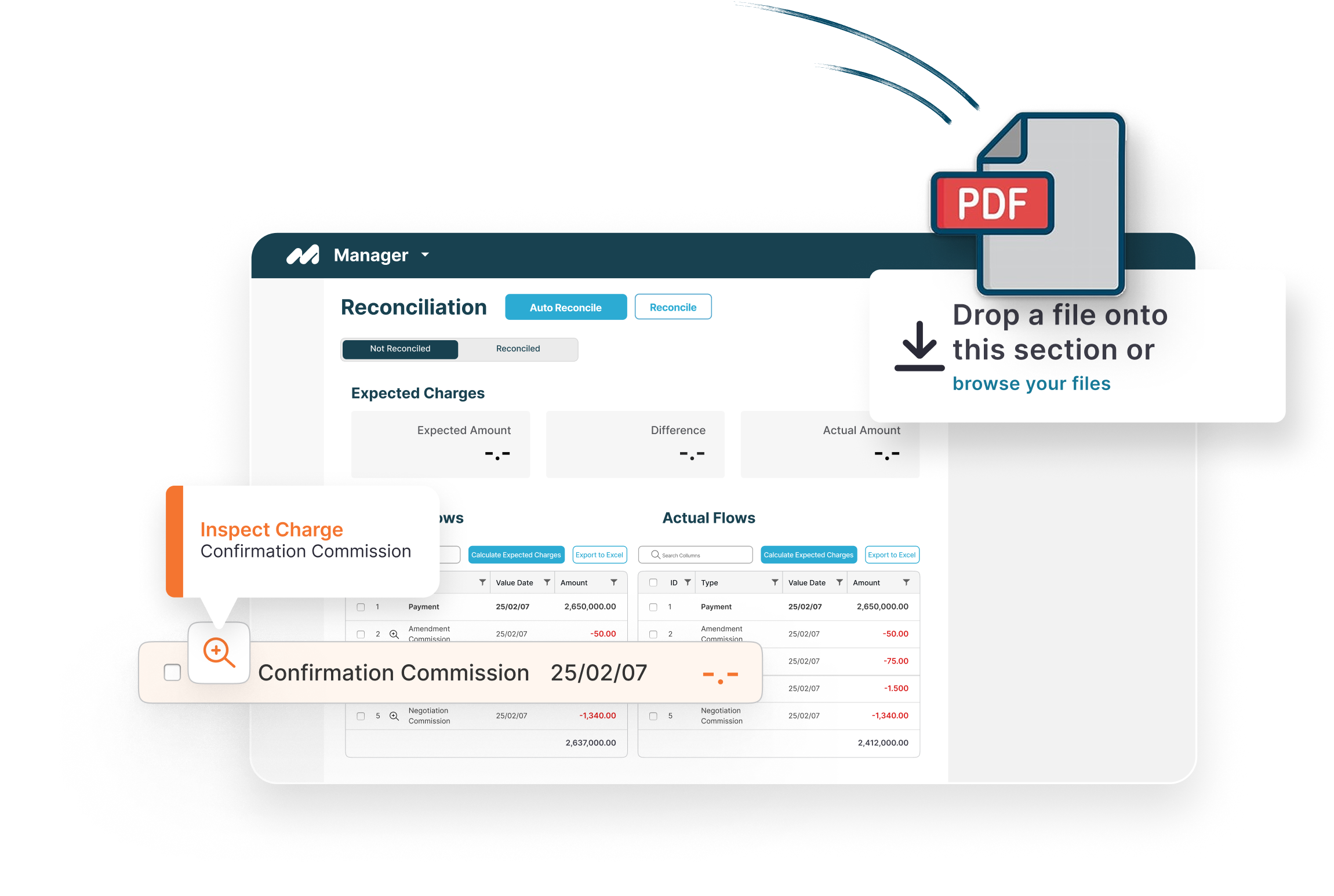
Turn payment advices into structured data
No more manual data entry.
Simply drag your payment advices into Mitigram and instantly convert them into clean, structured data fields — ready for analysis and tracking.
What used to take hours now takes seconds.
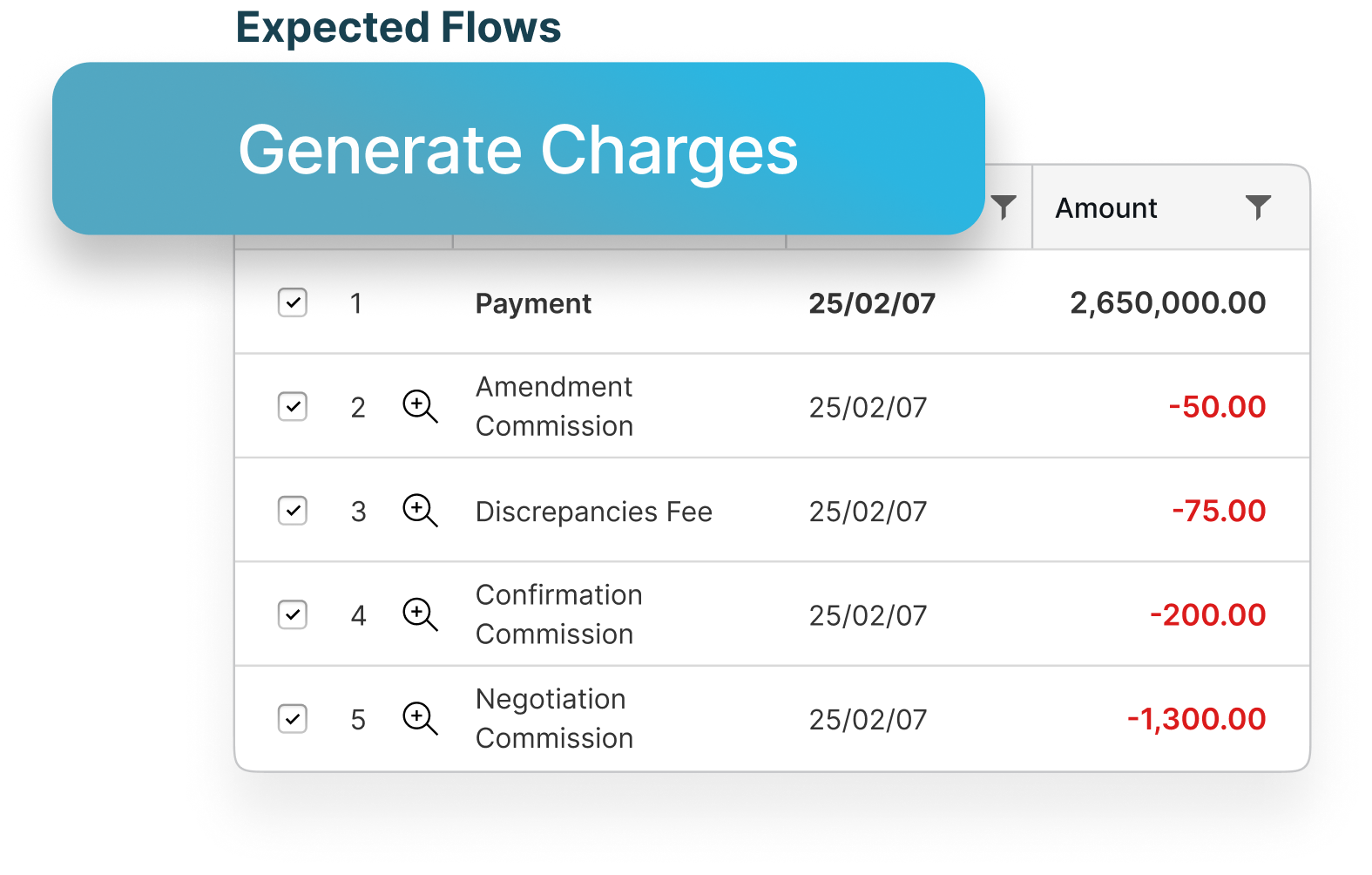
Auto-calculate expected costs
Automatically calculate expected costs for each transaction based on the accepted bank quote, instrument type, and deal specifics.
Capture issuance fees, handling charges, and any applicable add-ons – all structured and traceable.
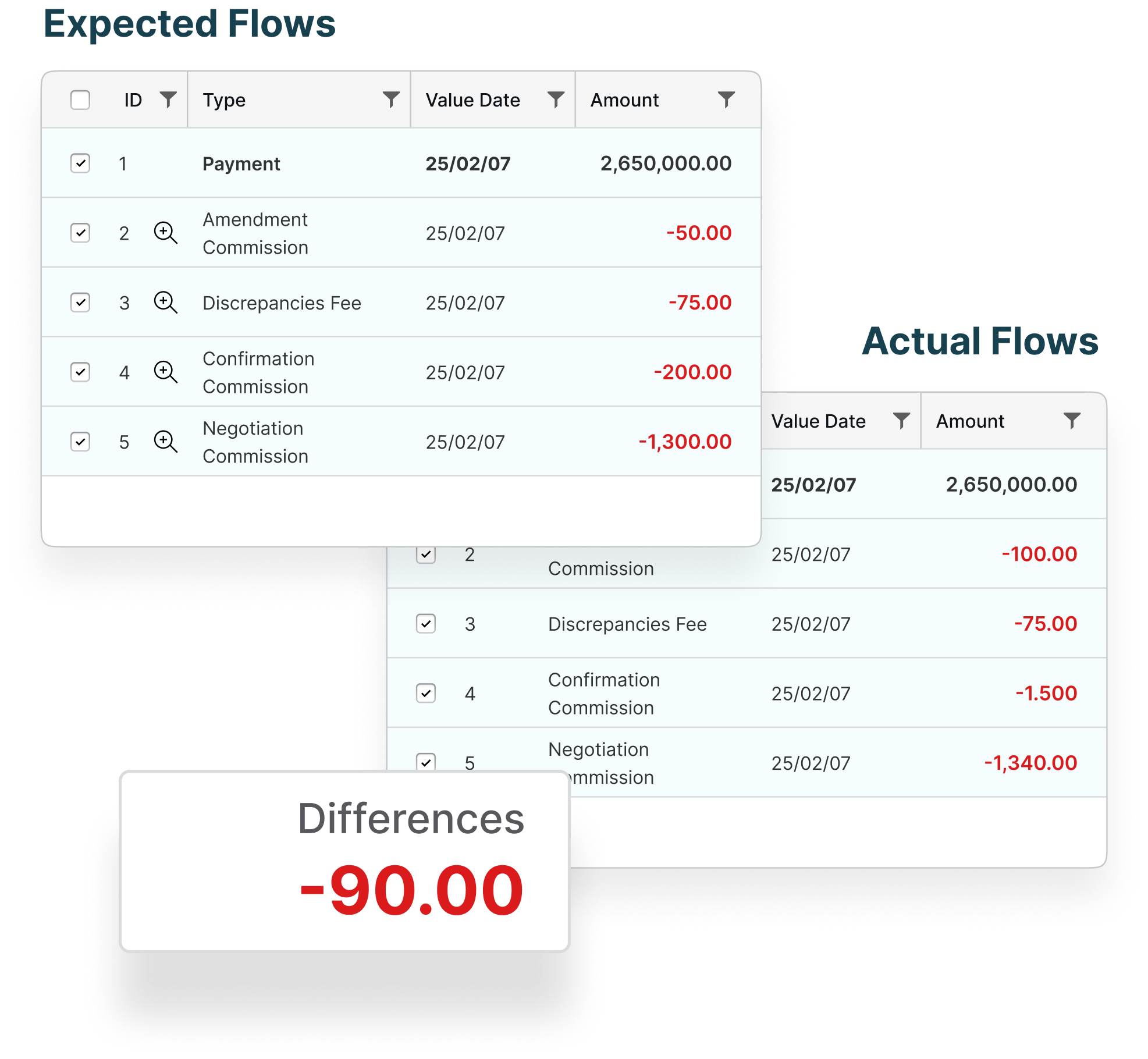
Compare costs & reconcile with ease
Stop letting cost errors and overcharges eat into your margins.
Automatically reconcile actual payments and charges with the expected amount. Identify cost discrepancies in real time and gain full transparency into what the differences are and why.
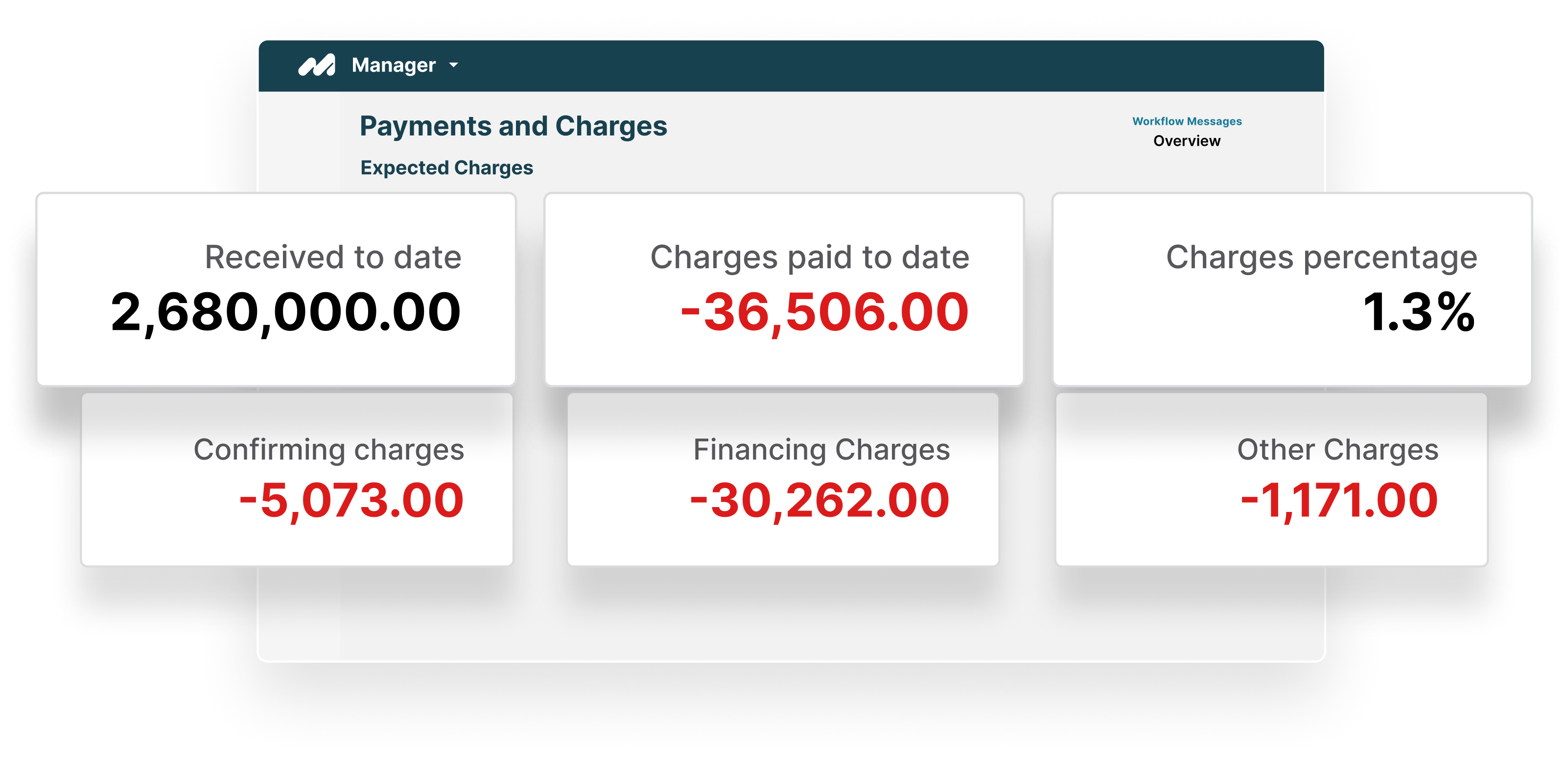
Analyze what's driving your spend
Aggregate payments and charges into different categories.
With this insight, you can monitor and track costs over time, understand what the true cost drivers are, and make data-backed decisions to optimize your spend.
From quote to reconciliation – full export LC control in one platform
Instead of jumping between emails, spreadsheets, and bank portals, your team can negotiate, manage, and track every step of an LC in one place.
Mitigram isn’t just a tool — it’s your command center to control cost, manage transaction, and mitigate risks for a sustainable growth.
Connect
Connect with 1,000+ issuing banks for LC confirmations, guarantee re-issuance, and more — all in one secure platform. Streamline your RfQs, expand your reach, and secure the best pricing every time.
Manage Transactions
Manage the full lifecycle of your trade documents in one secure, unified platform.
Simply drag and drop files into Mitigram and instantly convert them into clean, structured data with AI-powered precision.
Manage Costs
No more manual data entry. Turn payment advices into structured data, so you can track, reconcile, and analyze every LC-related charge across your export transactions.
Communicate
Connect with banks and corporates via SWIFT, EBICS, digital documents, direct chat, and in-platform messaging. Eliminate scattered email threads and manage every conversation from a single, secure channel.
Analyze
Deep insights into your business performance, trends, and activities based on actual data with customized reports and analytics. Benchmark to the market with industry-exclusive market pricing data.
Strategize
No more guesswork. Leverage analytics to identify potential opportunities, reduce costs, and steer issuance volumes to the best-fit banks. Align treasury strategy with industry data and your own reports.
FAQ
Why is reconciliation important in trade finance?
Reconciliation is critical in trade finance because it ensures the actual costs are aligned with the original quote from bank and internal budget, reducing the risk of fraud and ensuring compliance.
What documents are typically involved in trade finance reconciliation?
Key documents used in reconciliation include invoices, letters of credit, payment advices, shipping documents (e.g., bills of lading), bank statements, and SWIFT messages. Ensuring these documents and data are correctly saved and tracked in one system is essential to maintain transparency and efficiency.
What are the main challenges in trade finance reconciliation?
Trade finance reconciliation often faces several operational and visibility-related challenges, such as error-prone and inefficient manual data entry, discrepancies in document formats and terms between parties that complicate data input, limited ability to quickly identify bank overcharges or hidden cost discrepancies, and a lack of end-to-end transparency that can lead to cost leakage and increased risk exposure for treasury and finance teams.
How do digitalized and automated workflows improve cost reconciliation?
It eliminates most of the challenges we mentioned above. With a tool like Mitigram, you can quickly spot bank overcharges and cost errors to eliminate risks and prevent cost leakage. With automation, finance teams can replace error-prone manual processes with AI-powered data matching for a higher efficiency. The result? A more reliable, efficient, and transparent reconciliation process that strengthens financial control.
What are best practices for effectively following up on costs and reconciling in trade finance?
Adopt a centralized platform that consolidates all your trade finance activities — from the initial quote to settlement. By managing all payment records, bank charges, and document flows in one place, you gain full transparency across your export LC lifecycle. This ensures timely reconciliation, better audit readiness, and stronger control over costs and financial risks.