From optimizing working capital to leveraging data for global expansion, digital tools are giving small and mid-sized exporters the edge in an uncertain market.
The rules of global trade are being rewritten in real time. For Swedish exporters, that creates an uncomfortable paradox: more markets are technically reachable than ever before, yet the confidence to enter them has rarely felt more fragile. Trade finance technology is quickly becoming the deciding factor between companies that expand and those that wait.
In a recent webinar with Business Sweden, Elin Hagberg, Acting Head of Trade and Invest Facilitation and Senior Trade Advisor joined Mitigram CPO Joshua Kroeker to discuss how technology and proactive strategy have become essential tools for companies navigating these complex global waters.
Indeed, Hagberg set the scene for Swedish exporters, highlighting that we live in “very uncertain times when it comes to international trade”. According to Business Sweden’s quarterly interviews with exporting companies, managers are taking a cautious approach. The index from Q4 2025 revealed a shift: while Swedish companies are increasingly cautious about North America, they nonetheless maintain a more positive outlook on Western Europe.
Despite these concerns, trade continues to flow. As Hagberg noted, “trade is like water” – it finds new ways and new patterns even when traditional routes are blocked by policy shifts.
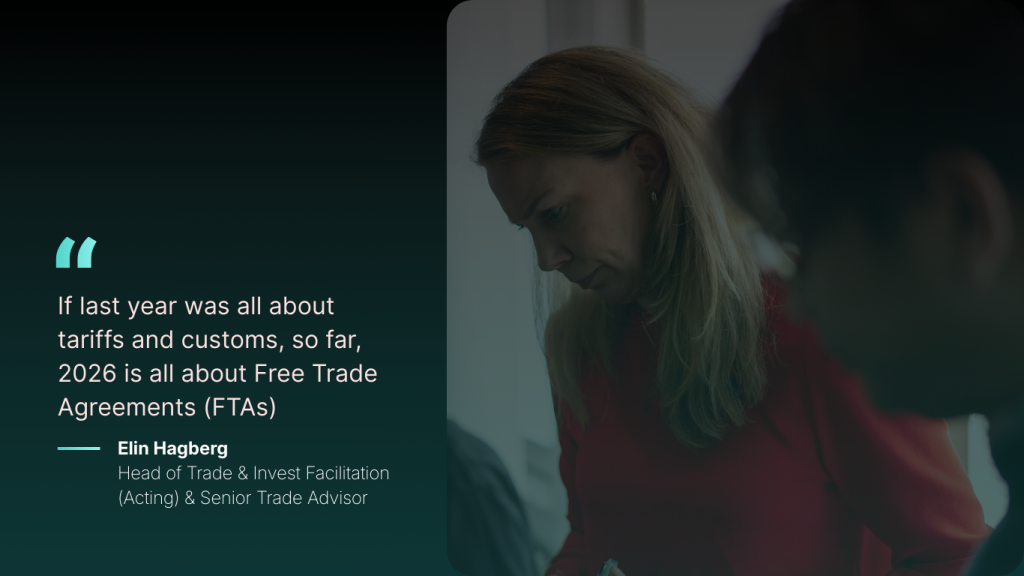
This renewed emphasis on FTAs is therefore evidenced in the ongoing European Union negotiations with Indonesia, India and the Mercosur region. In particular, these pacts provide the predictability and rules-based frameworks that companies need to invest in new relationships with confidence.
In contrast to large corporations, which often have dedicated departments to manage international logistics and finance, Small and Medium-Sized Enterprises (SMEs) frequently struggle with mounting complexity. As a result, this “complexity gap” creates several key hurdles:
For small and mid-sized Swedish exporters, finding new growth avenues is a necessity. At the same time, finding a way to manage risk is still going to be critical to their success and the success of the country.
To address these gaps, Kroeker explained that Mitigram has launched a suite of digital tools designed to give exporters – regardless of size – the same level of insight as major global players.
Specifically, these tools include:
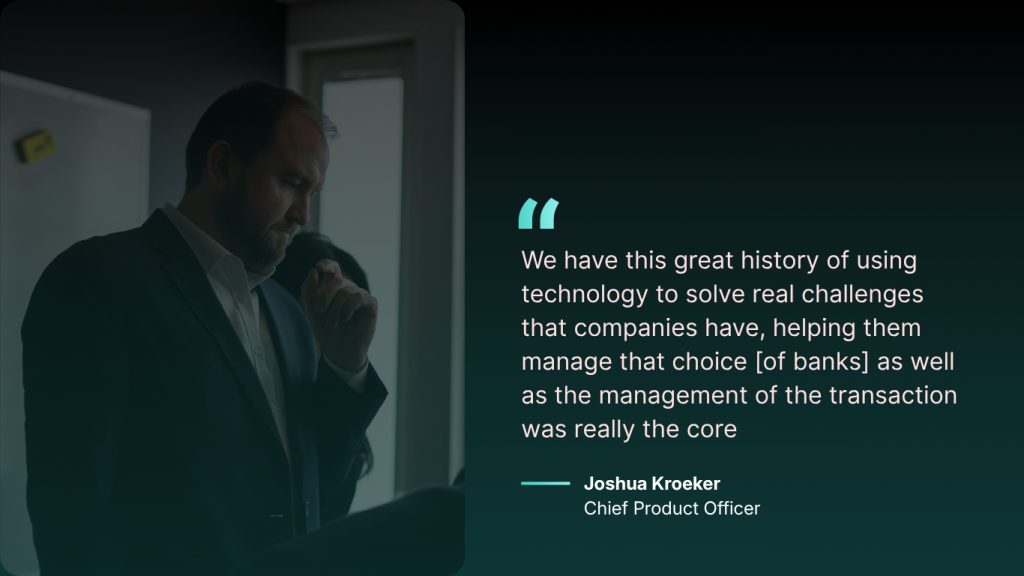
In summary, the consensus for the year ahead is clear: do your homework. Rather than broadly learning about international trade, Hagberg suggests companies must find answers to their specific questions – about their specific products in specific markets. Success in 2026 will belong to the exporters who utilize data to understand their specific market requirements and embrace technology to manage the inherent risks of global expansion.
Beyond these three newly-released tools, exporters can also use Square to request risk cover and financing efficiently when they are ready to enter new markets. Over the past ten years, Mitigram Square has helped many large corporates – including Brückner, Vale, and Cefla – manage their bank relationships and get a more suitable pricing. Book a demo with us to learn more about it.
—
Mitigram is a leading digital platform for global trade finance execution. Used by the world’s largest corporations and banks, Mitigram streamlines the communication, discovery, and execution of trade finance instruments, facilitating billions in global trade transactions. It combines transaction data with real-time market insights, bringing greater visibility and intelligence to every trade decision. In 2024, the platform facilitated over $41 billion in transactions across 120+ markets, supporting over 10,000 trade flows worldwide. www.mitigram.com

Case studies
Bridgestone gained visibility and control over high‑volume trade finance activities.